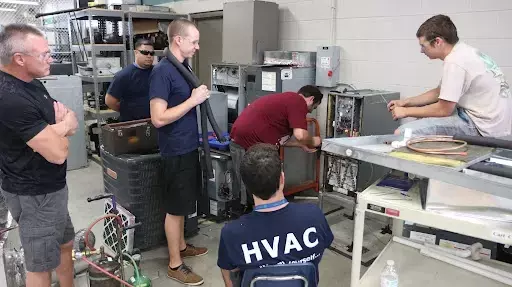
In Canada’s current economy, the demand for skilled HVAC (Heating, Ventilation, and Air Conditioning) technicians has reached an all-time high. With an aging infrastructure and a nationwide push for energy-efficient retrofitting, skilled HVAC professionals are among the most sought-after tradespeople in the country. For those seeking a career that combines high earning potential with long-term job security, HVAC training is one of the most reliable entry points.
Relatedsearches
High Earning Potential and Career Outlook
A career in HVAC is not just a job; it is a high-reward profession with clear financial incentives:
- Earning While You Learn: Through the Canadian apprenticeship model, you start earning a wage while gaining practical, on-the-job experience, significantly reducing the financial burden compared to university paths.
- High Demand: As Canada prioritizes sustainable energy, there is an urgent need for technicians who can install and maintain heat pumps and high-efficiency systems.
- National Mobility: By obtaining the Red Seal Endorsement, technicians gain the ability to practice their trade across all provinces and territories, making it one of the most flexible high-paying careers in Canada.
- Diverse Career Growth: Starting as a technician often leads to specialized roles in building automation, industrial refrigeration, or business ownership.
Course Length: 6–12 Months of Focused Training
To enter this lucrative field, most students begin with an intensive training program before transitioning into a registered apprenticeship.
| Program Type | Duration | Schedule |
| Pre-Apprenticeship | 6 to 12 months | Full-time daytime classes |
| Apprenticeship | 3 to 5 years | Combination of paid work and technical training |
Key Components of HVAC Training
HVAC training programs are designed to meet rigorous provincial standards and the Red Seal Program requirements.
- Heating SystemsInstallation and troubleshooting of gas, electric, and oil-fired furnaces. Understanding heat pumps and boiler systems.
- Refrigeration and CoolingThermodynamics and refrigeration cycles. Handling refrigerants and system evacuation techniques.
- Electrical SystemsBlueprints and schematic reading. Testing circuits, motors, and control boards.
- Safety and ComplianceAdhering to provincial building codes and TSSA/technical authority regulations. Safe handling of electrical and high-pressure gas hazards.
Clinical and Field Training Component
A hallmark of Canadian HVAC training is the Apprenticeship model. Following initial technical training, students move into an apprenticeship where they perform paid field work under a journeyperson. This hands-on phase is where the highest value of the training is realized, as apprentices apply theory to real-world emergency service calls and complex installations.
Certification and Red Seal Requirements
To become a fully qualified HVAC professional, candidates follow this path:
- Complete the required hours of technical training and on-the-job apprenticeship.
- Pass provincial certification exams.
- Achieve the Red Seal Endorsement, which serves as the gold standard for HVAC professionals in Canada.
Work Settings for HVAC Technicians
HVAC professionals work in varied and professional environments:
- Residential housing and luxury condominiums.
- Large-scale commercial office buildings.
- Industrial food processing and storage plants.
- Specialized firms focused on green energy and heat pump retrofitting.
Frequently Asked Questions (FAQ)
Why is HVAC considered a high-LTV (Lifetime Value) career? HVAC is essential to human comfort and health, making it "recession-proof." Technicians are consistently needed regardless of economic cycles.
What is the Red Seal Endorsement? The Red Seal Endorsement is a national standard that proves you have met a high level of competency. It allows you to work as an HVAC technician in any province or territory in Canada without needing additional provincial testing.
Do I have to pay for the entire training? Many HVAC training programs are supported by apprenticeship funding, meaning the cost is significantly lower than academic degrees, and you begin earning a salary while completing your apprenticeship.
Conclusion
HVAC training in Canada is an ideal path for those looking for a high-salary career with immediate job market relevance. By combining rigorous classroom training with the earn-while-you-learn apprenticeship model, you can enter a field that is foundational to Canada’s modern infrastructure and green energy future.
Relatedsearches
Data Sources
- Government of Canada (Red Seal Program): https://www.red-seal.ca/eng/about.shtml
- Job Bank Canada (Skilled Trades Outlook): https://www.jobbank.gc.ca/trend-analysis/search-job-market-reports
- Statistics Canada (Skilled Trades Demand): https://www150.statcan.gc.ca/n1/pub/71-606-x/71-606-x2023001-eng.htm