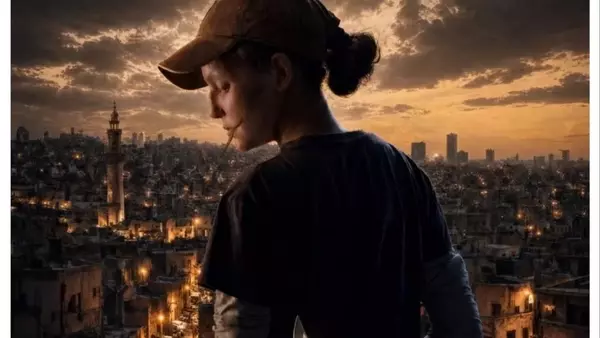

Turkish filmmaker Reis Çelik's latest work, "Night of Blindness," has premiered at the 28th Shanghai International Film Festival, where it is a contender for the prestigious Golden Goblet Award. This collaborative effort between Turkey and Germany delves into the turbulent era of Turkey's 1980 military coup. Çelik's decision to focus on a female protagonist, a left-wing activist named Fatma who must depend on the kindness of strangers while evading capture, is a deliberate choice to highlight women's experiences within the often male-dominated narrative of political oppression. The film's black-and-white cinematography is a conscious artistic decision, aiming to strip away distractions and bring the raw emotional core of the story, particularly the expressive eyes of the characters, to the forefront.
"Night of Blindness" forms the second installment of Çelik's ambitious "Night Trilogy," following his critically acclaimed "Night of Silence," which earned the Crystal Bear at the Berlin International Film Festival in 2012. The trilogy collectively explores the director's apprehension about humanity's growing inability to connect and understand one another. With a third film, "Night of the Deaf," already in the planning stages, Çelik seeks to continually shed light on societal realities that are frequently overlooked or downplayed, expressing a belief that audiences in China will find a resonant connection with the film's themes due to shared historical and worldview commonalities between Turkey and China.
The Narrative and Artistic Vision Behind 'Night of Blindness'
Director Reis Çelik's film, "Night of Blindness," makes its debut at the Shanghai International Film Festival, offering a poignant exploration of the 1980 military coup in Turkey. The film distinguishes itself by centering on Fatma, a female activist, thereby providing a unique feminine lens through which to view political turmoil, a perspective Çelik felt was underrepresented in such narratives. His personal history influenced the film's development, leading to a story that emphasizes human connection and vulnerability amidst crisis. The black-and-white aesthetic is not merely a stylistic choice but a fundamental aspect of the film's artistic intent, designed to draw the audience's focus to the emotional depth and the unvarnished truth of the story, especially the nuanced expressions conveyed through the characters' eyes.
Çelik articulated his vision during the film's press conference, explaining that the absence of color compels viewers to concentrate on the essence of the narrative and the subtle emotional cues of the characters. He underscored the deliberate choice of black and white to avoid any potential distraction that color might introduce, ensuring that the audience's attention remains on the narrative's core. The film's setting, a cramped hiding space, further intensifies the human drama, making the interactions and the reliance on strangers crucial to Fatma's survival. This narrative decision, coupled with the stark visual style, aims to create a deeply immersive and emotionally resonant experience for the viewers, inviting them to reflect on themes of trust, survival, and human resilience under extreme duress.
The 'Night Trilogy' and Its Universal Themes
"Night of Blindness" represents a significant continuation of Reis Çelik's broader artistic endeavor, the "Night Trilogy," which began with the acclaimed "Night of Silence." This overarching project serves as a cinematic platform for Çelik to address profound concerns about the trajectory of human society, particularly the perceived decline in humanity's collective capacity for listening, observing, and empathetic understanding. He revealed his intentions for a forthcoming third installment, tentatively titled "Sağır Gece" (Night of the Deaf), further solidifying the thematic arc of the series, which aims to explore the various facets of human disconnection and societal blindness. Çelik emphasizes his role as a filmmaker in bringing to light suppressed realities and anticipated a strong resonance with Chinese audiences, given the cultural and historical parallels between Turkey and China.
The director's ambition extends beyond mere storytelling; he seeks to use his cinematic voice to challenge audiences to confront aspects of reality that are often downplayed or intentionally ignored. By weaving together narratives of political and social oppression, the "Night Trilogy" attempts to foster a deeper sense of awareness and empathy. During the Shanghai International Film Festival, the lead actors, İştar Gökşeven and Aydin Orak, shared their experiences of working on the film, particularly how performing in near-total darkness enhanced their reliance on voice and subtle physical cues to convey emotion. Gökşeven noted the unique challenge and reward of this acting style, suggesting it offered a profound opportunity for artistic expression, reinforcing the film's thematic commitment to profound emotional communication through minimalist means.