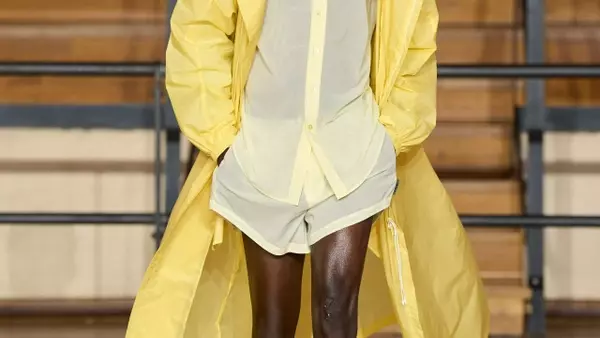

A notable transformation is underway in men's fashion, as evidenced by the recent runway presentations in major fashion capitals like Milan and Paris. Leading designers, including Miuccia Prada, Raf Simons (for Prada), Jonathan Anderson (for Dior), and Demna (for Gucci), are collectively steering menswear towards a distinct new aesthetic. This shift signals a departure from the previously dominant oversized styles, ushering in a 'slender man' silhouette that redefines proportions and emphasizes the male form.
This emerging style is not merely about a leaner appearance but is characterized by specific design elements. Garments are often cut to sit at or slightly above the waist, paired with form-fitting, cropped tops that reveal a hint of skin. Demna's Fall 2026 debut for Gucci notably showcased this direction, moving away from the fluid shapes seen at Balenciaga. His collection featured sharp, muscular lines, exemplified by high-waisted silver jeans and a second-skin cropped t-shirt, boldly declaring a new design philosophy.
Similarly, Jonathan Anderson's Fall 2026 menswear collection for Dior marked a significant evolution from his previous works. While his debut featured voluminous shorts and enveloping jackets, this season presented glittering tops, rock 'n' roll inspired jeans, and sharply tailored Bar coats with nip-waists. A key component was the introduction of undeniably skinny trousers, often paired with matching jackets that allowed for a tantalizing glimpse of the midriff.
At Prada, the Spring 2027 collection echoed this trend with shrunken jackets and narrow trousers, further refining the slender profile introduced in the previous spring. This consistent theme across multiple influential fashion houses suggests a potent new direction in menswear.
The rapid adoption of this 'slender man' silhouette raises questions about its origins. Menswear typically evolves incrementally, yet this change feels more like an abrupt paradigm shift. For a considerable period, fashion emphasized voluminous fabrics, elegant pleated trousers, and comfortable, enveloping coats, often concealing the body beneath layers of plush material. This new aesthetic unequivocally rejects such concealment, instead celebrating the body, whether through subtle flashes of skin or the defined contours revealed by close-fitting garments.
This renewed emphasis on precision in tailoring and body-conscious cuts feels strikingly contemporary. It prompts reflection on whether this trend is a response to contemporary societal fascinations with physique, perhaps influenced by phenomena like the 'Ozempic era,' or simply the natural cyclical nature of fashion, where designers seek fresh inspiration after pushing previous styles to their limits. While the exact motivations remain open to interpretation, the message to consumers is clear: a new menswear silhouette is on the horizon, hinting at a future where fitness and defined forms play a central role in sartorial expression.