
In a significant market rebound, Bitcoin has surged to its highest point in nearly two weeks. This upward movement is largely attributed to a recently announced agreement between the United States and Iran, aimed at resolving their disputes and facilitating the reopening of the crucial Strait of Hormuz. The cryptocurrency market, which had faced a period of volatility and decline earlier this month, appears to be reacting positively to the diminished geopolitical tensions, signaling a renewed appetite for risk among investors.
Bitcoin's Rally Fueled by Geopolitical Détente
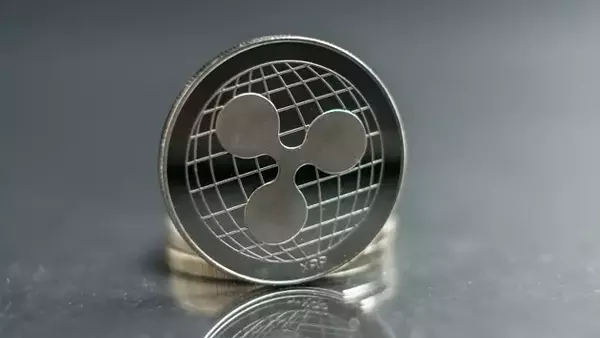
On a bright Monday morning, the premier digital currency, Bitcoin, saw a notable increase, climbing by as much as 3.1% to reach a peak of $65,958. While it later settled slightly, trading around $65,600 in early New York hours, this rise marks a substantial recovery. Concurrently, Ether, the second-largest cryptocurrency, also experienced a robust gain of up to 3.7%, touching $1,731, with other smaller digital tokens like Solana and XRP witnessing even more pronounced surges.
This rally comes as a welcome relief to the crypto market, which had been grappling with a downturn. Earlier in the month, Bitcoin's value had plummeted below $60,000, hitting its lowest point since October 2024. This slump was exacerbated by a significant sell-off, triggered in part by Michael Saylor's MicroStrategy, a major corporate holder of Bitcoin, disclosing the sale of a small portion of its reserves, alongside substantial outflows from exchange-traded funds.
Market analysts are closely watching Bitcoin's trajectory. Pratik Kala, a portfolio manager at Apollo Crypto, highlighted that a critical level for Bitcoin is $67,000, influenced by various factors including trading volumes and moving averages. He noted that while the risks associated with MicroStrategy's holdings haven't fully dissipated, the market appears to be downplaying them.
The broader financial markets also experienced a surge in risk appetite following President Donald Trump's social media announcement of a "complete" peace agreement with Iran and the lifting of the US blockade on the Strait of Hormuz. European stock markets saw gains, and US equity futures jumped, while Brent crude oil prices dropped by over 4%, indicating a positive global economic response to the reduced tensions.
Daniela Hathorn, a senior market analyst at Capital.com, commented on the agreement's implications for Bitcoin, calling it an "interesting test." She observed that throughout the period of conflict, cryptocurrencies behaved like high-beta risk assets, with geopolitical instability aligning with ETF outflows, higher yields, and subdued market sentiment. Hathorn suggested that a successful resolution of this major macro risk could significantly bolster overall risk appetite, especially if it leads to lower oil prices and alleviates inflation concerns.
Looking ahead, reduced hostilities in the Middle East could provide a boost to risk assets just before Kevin Warsh's inaugural meeting as chairman of the US Federal Reserve this week. However, the prospect of higher interest rates from the Fed could potentially exert downward pressure on cryptocurrency values.
Sean McNulty, Asia-Pacific derivatives trading lead at FalconX, emphasized the Federal Reserve's upcoming meeting as the week's focal point. He noted that markets anticipate a shift from an accommodative to a neutral or hawkish stance from the Fed, with a hawkish surprise posing the primary downside risk for the crypto market.
Reflecting on Geopolitics and Digital Assets
The recent rally in Bitcoin and other cryptocurrencies following the US-Iran agreement underscores the increasing sensitivity of digital asset markets to global geopolitical developments. This event serves as a potent reminder that, contrary to some early narratives, cryptocurrencies are not entirely decoupled from traditional financial and political landscapes. The swift market response to the Strait of Hormuz deal highlights how factors like international stability and supply chain security can directly influence investor sentiment and, consequently, the valuation of even decentralized assets. As a reporter covering global markets, this incident reveals the intricate web connecting geopolitics, conventional economies, and the burgeoning digital asset space. It also prompts us to consider the evolving role of cryptocurrencies as both a speculative investment and, potentially, a safe haven or risk asset depending on the prevailing global climate. The anticipation surrounding the Federal Reserve's decisions further illustrates the dual influences of macroeconomic policy and geopolitical events on the dynamic world of digital finance.